

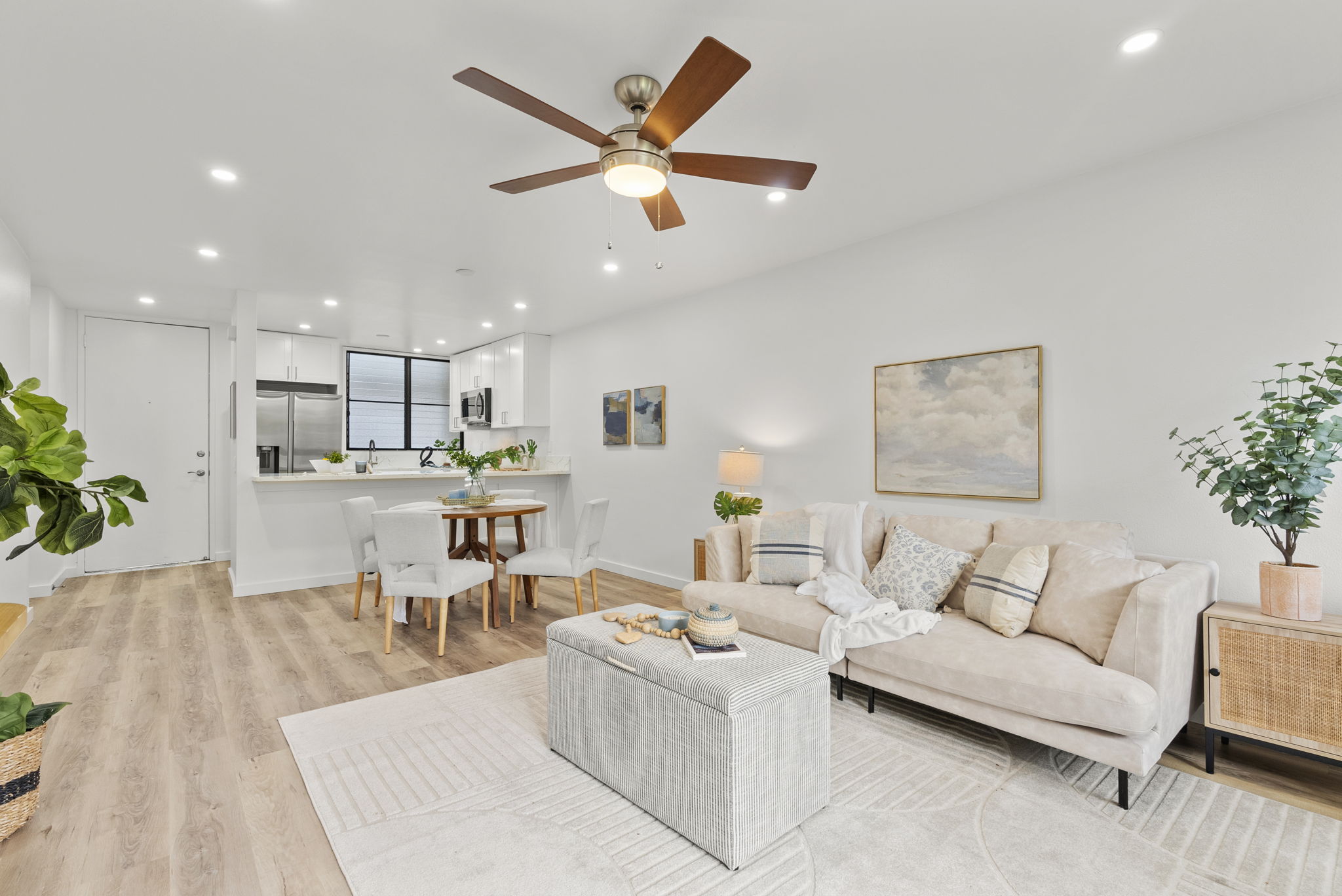
When homeowners want the look of hardwood or stone without the higher price tag, two materials usually top the list: laminate and luxury vinyl plank (LVP). Both offer durability, style, and affordability compared to natural materials, but they're built differently and perform differently depending on where and how they're used. Understanding these differences can help you make a confident, informed decision for your next flooring project.
What Is Laminate Flooring?
Laminate flooring is made from a high-density fiberboard core topped with a printed image layer and a protective wear layer. This construction allows laminate to convincingly mimic wood grain, stone, or tile at a much lower cost. It's known for being scratch-resistant and relatively easy to install, often using a click-lock system that doesn't require glue or nails.
What Is Luxury Vinyl Plank?
LVP is made almost entirely of PVC vinyl, giving it one major advantage over laminate: it's 100% waterproof. Because the core material itself doesn't absorb moisture, LVP can be installed in bathrooms, kitchens, basements, and laundry rooms without concern for water damage — something laminate typically cannot handle well.
Comparing Durability and Water Resistance
This is the most important distinction between the two materials. Laminate's fiberboard core can swell or warp if exposed to standing water for extended periods, making it best suited for bedrooms, living rooms, and other dry spaces. LVP, by contrast, holds up in nearly any room of the home, making it the more versatile choice for households with young children, pets, or frequent spills.
Comfort, Sound, and Feel Underfoot
Laminate tends to have a firmer, slightly harder feel underfoot and can sometimes produce a hollow sound when walked on, depending on the underlayment used. LVP typically feels softer and warmer, and many products include an attached cushioned backing that also helps with sound absorption — a meaningful benefit for homes with multiple stories.
Cost and Long-Term Value
Laminate is generally the more budget-friendly option upfront, making it appealing for large-scale projects or full-home renovations. LVP tends to sit slightly higher in price but often delivers better long-term value in high-moisture or high-traffic areas, since it requires less risk of replacement due to water damage.
Making the Right Choice for Your Home
Ultimately, the right choice comes down to where the flooring will be installed and how the space is used day to day. A knowledgeable flooring specialist can help you weigh these factors against your budget and design goals. To learn more about the team's experience and philosophy toward honest recommendations, visit the About Us page. And when you're ready to compare laminate and LVP samples side by side, check the Location page to find your nearest showroom and get started.


